Akira Kurosawa
Akira Kurosawa is one of the most famous foreign directors in the United States and it is mostly due to his large fan base towards his samurai films. But it was his structurally innovative film Rashomon (1950) and its premiere in Tokyo which stunned audiences and cemented the director’s reputation as one of the most important young filmmakers in Japan. Rashomon ultimately became the winner of the Golden Lion at the Venice Film Festival and its popularity grew, subsequently being released in Europe and North America. The commercial and critical success of the film opened up Western film markets for the first time to the products of the Japanese film industry, which in turn led to international recognition for other Japanese filmmakers. Kurosawa’s favorite go-to lead actor Toshiro Mifune also achieved more world-wide fame than any other actor of his century, and the two ultimately collaborated in a total of 16 pictures making the two of them one of the greatest director-actor duos in the history of cinema.
When Kurosawa released his four-hour adventure epic Seven Samurai (1954) it became the single largest undertaking by a Japanese filmmaker at the time. The film became a technical and creative watershed that became Japan’s highest-grossing movie and also set a new standard for the Japanese film industry. Many of Kurosawa’s films became such popular successes internationally that several of them were later remade in America, most famously The Hidden Fortress (1958), in which its entire premise was remade into George Lucas’s science-fiction blockbuster Star Wars (1977). Throughout his filmmaking career Kurosawa was heavily influenced by the epic stories of William Shakespeare and the American westerns of director John Ford, and because of that he was heavily condemned by the Japanese for being too western and old-fashioned, making it hard for him to find funding for most of his later pictures. Kurosawa once wrote in his memoirs, “There is one person, I feel, I would like to resemble as I grow old: The late American film director John Ford.”
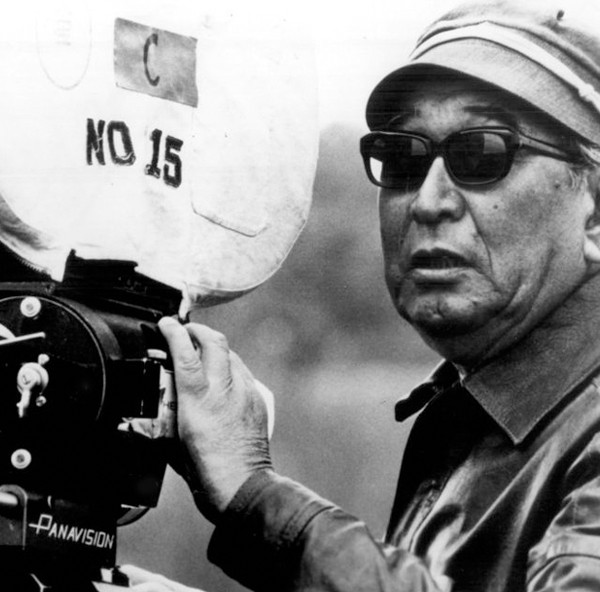
Kurosawa admired American director John Ford so much that he apparently wore dark glasses in imitation of the great director while on set filming, and when John Ford became the first recipient of the AFI Lifetime Achievement Award, Kurosawa was among the many who announced him to be the world’s greatest living director. Because of the international popularity for films like Yojimbo (1961), Throne of Blood (1957) and Ran (1985), not many fans acknowledge Kurosawa’s work outside the samurai genre, which I find to be greatly unfortunate. Kurosawa has made some of the most powerful and emotional modern dramas which deal with the existential human condition, like Red Beard (1965), High and Low (1963), Dersu Uzala (1975), and Ikiru (1952). Kurosawa is regarded today as one of the most important and influential filmmakers in the world and was posthumously named ‘Asian of the Century’ in the “Arts, Literature, and Culture” category by AsianWeek magazine.

For Kurosawa, original Japanese posters are a favourite with collectors: the standard B2 size (about 20 by 29 inches) and the tall, narrow tatekan (about 20 by 58 inches). Rashomon (1950), Seven Samurai (1954) and Yojimbo (1961) are among the most sought-after titles. His films were revived often in Japan, and the revivals used the same poster sizes, so an "original" poster may be an authentic reissue rather than a first release; check the date before paying a first-release price. American releases came with one-sheets, inserts and lobby cards, while Italian, French and Polish posters often show strikingly different artwork. Japanese chirashi flyers and theater programs, especially from later releases, are an affordable way to start.
See more Akira Kurosawa memorabilia on eBay ›
Current listings from eBay. As an eBay Partner, Classic Art Films may earn a commission from qualifying purchases.
Articles and Essays on Akira Kurosawa
Ikiru (1952)

“Sometimes I think of my death. I think of ceasing to be…and it is from these thoughts that Ikiru came.” -Akira Kurosawa Everyday he sits at his desk with stacks of countless documents, and takes a rubber stamp and presses on each one of those documents over and over again. He’s the Public Affairs Section Chief in […]
Continue