Alfred Hitchcock
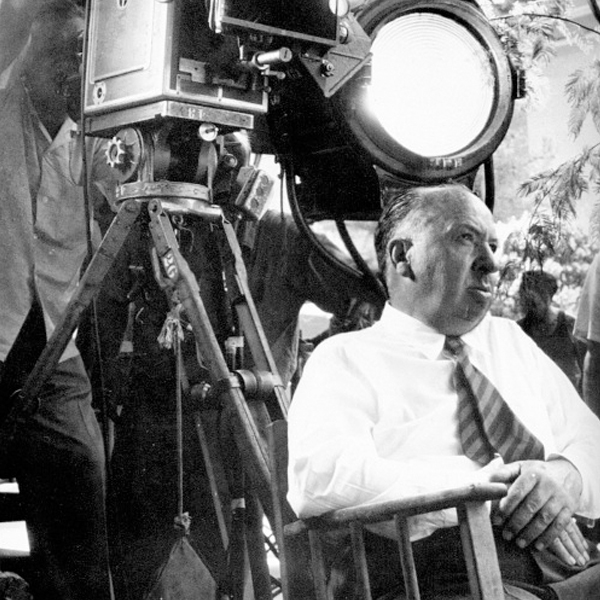
Alfred Hitchcock was an English film director and producer who became known as the ‘Master of Suspense’ and one of the most important pioneers in the film industry. He was discovered extremely early on in his hometown in Europe becoming very successful in silent and early talkies and for establishing the suspense and psychological thriller genres. Even before making his drastic move to Hollywood in 1939 and becoming a US citizen in 1955 he was already looked at as one of England’s greatest directors after making such British classics like The 39 Steps (1935) and The Lady Vanishes (1938).
When arriving to the United States he joined with American producer David O. Selznick and made his first financial success with Rebecca (1940), which took the Academy Award for Best Picture. As great of an achievement as Rebecca was Hitchcock never viewed the film as his own personal creation probably because most of the creative decisions during filmmaking were controlled by Selznick and the studio. After the early success of Rebecca Hitchcock began to break away from Selznick’s control and was ultimately given the freedom and rein to finally make films the way he wanted to. His later successes throughout the 40’s, 50’s and 60’s ranged from such cinematic classics as Shadow of a Doubt (1943), Notorious (1946), Rope (1948), Strangers on a Train (1951), Rear Window (1954), Dial M for Murder (1954), Vertigo (1958), North by Northwest (1959), Psycho (1960) and The Birds (1963).
During a career which spanned more than half a century, Hitchcock created for himself a distinctive and recognizable style that has influenced many future filmmakers. First, he pioneered the use of a camera which would move in a way that would mimic a person’s gaze, which would resemble a disturbing form of voyeurism. He framed and distorted specific shots to heighten anxiety, fear, or empathy with its audience, while also adding a light touch of dark humor within the context of the story. The themes he used throughout his stories have also become a form of auteur. For instance, most of his stories feature innocent fugitives who are on the run from the law, twist endings and beautiful mysterious blondes.
He loved to explore themes of violence, murder, crime and obsession, all with disturbing sexual undertones. Hitchcock created the famous term ‘MacGuffin’ which would serve as the film’s main plot driven theme but wouldn’t necessarily have anything to do with what happens to the characters or the outcomes within the stories. Through all his numerous cameo appearances in his own films, fascinating interviews which presented his sly and macabre sense of humor, his alleged reference that all actors were merely cattle, inventive film trailers, and the highly popular television program Alfred Hitchcock Presents, Alfred Hitchcock became a cultural worldwide icon. Ironically Hitchcock has never won an Academy Award for Best Director, even though many today regard him as one of the greatest and most influential film directors who has ever lived.

Hitchcock was his own best publicity, so his famous profile and his face often appear on the posters as prominently as the stars. Saul Bass's graphic design for Vertigo (1958) is among the most prized of his American posters, and Psycho (1960) material is always in demand, including the posters on which Hitchcock points to his watch and warns that no one will be admitted after the picture has started. On American posters, look for the National Screen Service number in the bottom border: a code such as 58/… gives the year of release, and an "R" in front of it marks a later reissue. Be cautious with inexpensive "signed" photos. Genuine Hitchcock autographs, often with his little self-portrait sketch, are costly and should come with reputable authentication.
See more Alfred Hitchcock memorabilia on eBay ›
Current listings from eBay. As an eBay Partner, Classic Art Films may earn a commission from qualifying purchases.