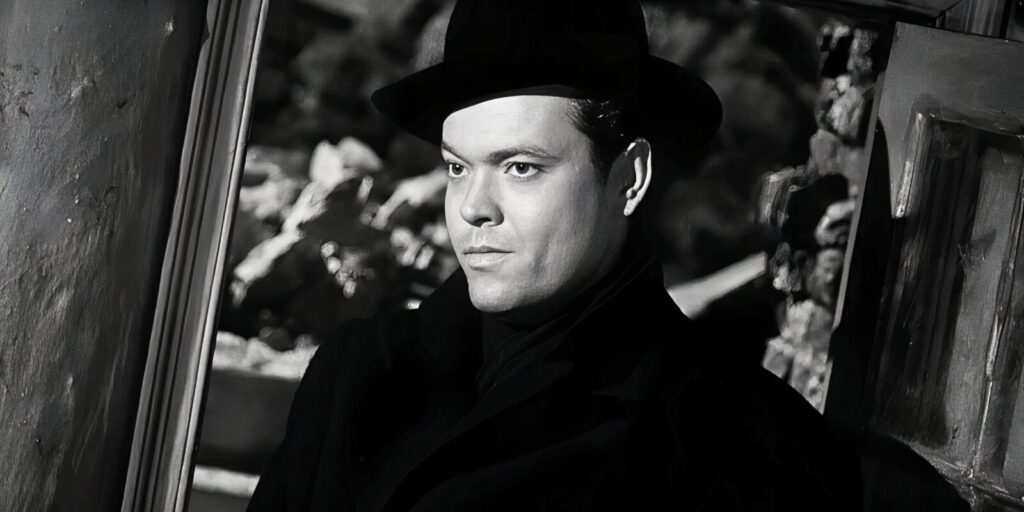
Waiting For Harry Lime
My passion has always been cinema, since I was very young. Which is why I find myself so disappointed in so many modern film buffs.
Ask them to list their favorite films, and nearly every title is post-1980s, shot in color, and without subtitles. Scroll through the YouTube critics — the most popular voices talking about movies today — and it is the same shelf: they watch, reference, and review modern popular movies almost exclusively. Art films barely exist for them. It is as if they all graduated from the same post-Tarantino film school and finished with the Whedon touch: self-aware, meme-driven, quirky characters armed with puns, no one permitted to feel anything plainly, every sincere moment undercut by a quip before it can land. Young people today seem less interested in the classics of the past than in comic book movies, video games, blockbuster CGI franchises, remakes, reboots, and sequels.
Call it snobbery if you want. Roger Ebert heard the same accusation, and his answer has stayed with me: “Many moviegoers say they do not ‘like’ black and white films. In my opinion, they are cutting themselves off from much of the mystery and beauty of the movies… I have been described as a snob on this issue. But snobs exclude; they do not include. To exclude black and white from your choices is an admission that you have a closed mind, a limited imagination, or are lacking in taste.”
We live in a fast-paced society of infinite feeds — TikTok, Reels, YouTube Shorts — reaction videos, livestreams, and streaming filler made to be half-watched from behind a phone. Mindless distraction has become the norm. Much of the blame belongs to the rise of technology: our dependence on social media, the smartphone, and an algorithm that never stops feeding us. Bombarded with useless information from all directions, our attention spans have shrunk to a matter of seconds — some viewers now watch films at double speed, and call it efficient.
They want the story handed to them finished: a message spelled out, every question answered, the ending tied up with a bow. Ambiguity reads to them as a mistake, which is why the most successful film videos on YouTube are the ones that explain the ending — removing, helpfully, the mystery the filmmaker left there on purpose. The films that last do the opposite. Bergman, Ozu, Bresson, and Tarkovsky end their movies and leave the rest to you. They treat the audience as adults, and trust them to do the thinking.
I was raised in the consumer culture of the eighties — pop culture, fast food, mindless television — so I understand it completely. But it still saddened me to discover how many young people could reference scenes from classic American films not because they had watched them, but because they had absorbed them secondhand: through endless Family Guy parodies, TikTok skits, Twitter memes, YouTube clips, and GIFs. Most people today know The Godfather and Casablanca only this way: they can give you “an offer he can’t refuse” and “here’s looking at you, kid,” they can do the Brando impression with the cotton in the cheeks — and they can quote “Play it again, Sam,” a line nobody in Casablanca ever says. The quotation survived; the film didn’t. They know the movies as references, not as films. The reference is the whole experience now — the small hit of “I got that” in place of the feeling the scene was made to give you. It is homage without sincerity, pop culture with nothing underneath it: the doorway scene quoted by a thousand people who have never waited for Harry Lime.
Roger Ebert opened The Great Movies by asking whether today’s audiences still have the patience to wait for Harry Lime in The Third Man. He asked it in 2002. If the answer was already in doubt then, what will moviegoers be in twenty years from now?