The Seventh Seal (1957)
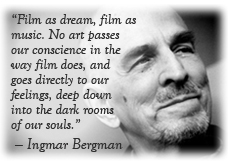
Ingmar Bergman’s The Seventh Seal immediately became a classic staple in art film culture, and couldn’t have been released at a more perfect time. Film-goers were startled with The Seventh Seal’s upsetting imagery, ghastly symbolism, existential dialogue, and religious-ethical concerns in a possibly godforsaken universe. The films iconic shot of Death playing chess with a Knight, and of its climatic sequence of the knight and of his followers being led away over the hills in a solemn dance of death, became a landmark in pop culture history. The Seventh Seal’s symbolism and brooding uncompromising subject matter was immediately apprehensible to people trained in literary culture who were just beginning to discover the ‘art’ of film, along with critics and readers of Cahiers du Cinema who were discovering Bergman for the first time. With the rise of the Auteur Theory The Seventh Seal suddenly became the quintessential art film of high school and college literature courses discovering Bergman’s recurring themes such as ‘The fear of death’ and the ‘absence of God’ which were grim subjects the director would endlessly explore throughout his career. This is a bleak uncompromising film which explores the simplicity of good and evil, along with the complexity of its tormenting hero, who struggles with such spiritual questions of faith and doubt; which clearly represents Bergman himself. Bergman was raised in a very strict Lutheran household where his father was a stern conservative parish minister with strict parenting rules. Growing up, Bergman would describe his home as a fortress of restriction and on several occasions Bergman was locked up in dark closets for infractions like wetting the bed. Throughout his early years Bergman became fascinated by the themes of death and the bleak side of humanity which brought upon his fascination with Adolf Hitler and the horrors of the holocaust. Even though he was raised in a devout Lutheran household, Bergman later stated that he lost his faith at age eight, and only came to terms with this fact while filming Winter Light. And so when filming The Seventh Seal he was still at the cross-roads with his spiritual identity while continuing to come to terms with his faith. Throughout The Seventh Seal Bergman purposely has characters asking questions but not be given the answers; because the director himself didn’t know them. Even the Grim Reaper, the legendary ‘Angel of Death’ can’t reveal any of these universal questions that humans seek to discover, and when the knight continues asking him questions, Death calmly responds, “You ask too many questions.”
The Seventh Seal (1957) is on MY TOP 300 FILMS LIST
The Hairdresser’s Husband (1990)Latest filmsWatched after ›
History Is Made at Night (1937)
As an eBay Partner, Classic Art Films may earn a commission from qualifying purchases made through links on this page.
Follow my film diary on Letterboxd.