Portrait of a Lady on Fire (2019)
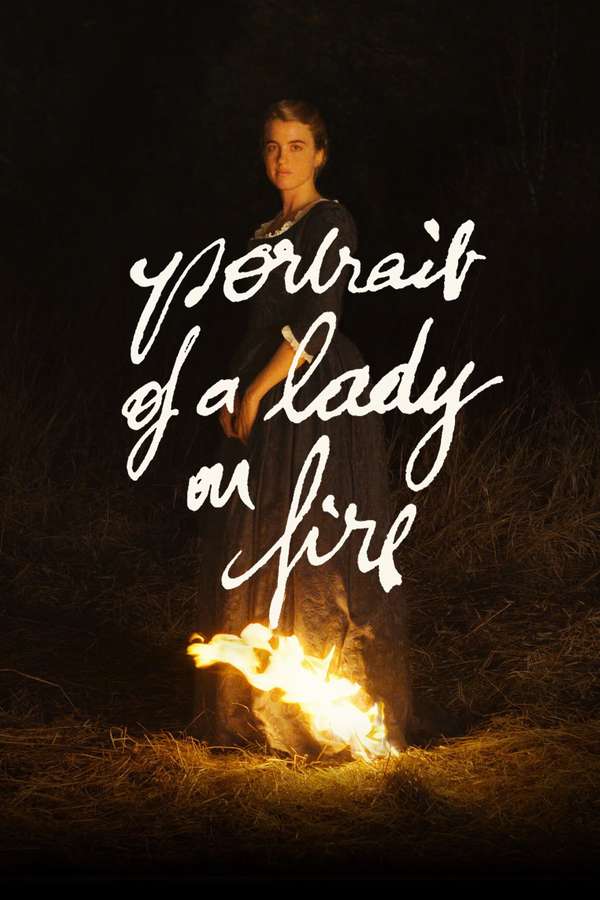
Céline Sciamma's Portrait of a Lady on Fire (2019) begins as an act of surveillance. In Brittany, in the late eighteenth century, the painter Marianne is hired to paint Héloïse, a young woman promised to a Milanese nobleman she has never met. Héloïse refuses to sit for the portrait that will be sent to him, so Marianne must pose as her companion, study her in secret, and paint her from memory. It is a film about a woman being turned into an image, by another woman who is falling in love with her.
Midway through, the women read aloud the story of Orpheus and Eurydice: Orpheus, allowed to lead his wife out of the underworld on one condition — that he not look back — who turns anyway, and loses her forever. Marianne calls it the poet's choice, not the lover's. Héloïse disagrees: perhaps Eurydice called out to him. Perhaps she made the choice. Sciamma then mirrors the myth in a single image — Héloïse in her white wedding gown, calling to Marianne: turn around. And Marianne turns, and looks back. The woman in the story is no longer the one lost by being looked at. She is the one who asks to be seen.
It is a feminist masterpiece, and the strangest thing about it is that it is a film about men with almost no men in it. The most powerful person in the story never appears at all — the husband in Milan, who will judge his bride by a painting. Everything bends around his absence: the commission, the deadline, the mother enforcing a system she herself survived.
Against that absence, the film sets three women from three different classes — painter, mistress, servant — who simply take care of one another. When Sophie, the servant, needs an abortion, there is no judgment and no melodrama, just help. And the bonfire: the women chanting together in the dark, Héloïse's hem catching fire as she stares across the flames. I have rarely seen sisterhood filmed as something elemental.
Marianne is hired to turn Héloïse into an object a man can approve. Instead, the two of them make the only honest portrait in the film — the one they create by looking at each other as equals.
As an eBay Partner, Classic Art Films may earn a commission from qualifying purchases made through links on this page.
Follow my film diary on Letterboxd.